A managing director we spoke with recently put it plainly: "We know it's coming. We just haven't got round to it yet." He was talking about the Employment Rights Act 2025 — the biggest change to UK employment law in a generation, and one his own management team had not been briefed on at all.
He is not unusual. Most of the organisations we talk to know something is changing. Far fewer can tell you what, or when, or what it means for a decision a manager might make next week.
It Does Not Feel Urgent — Until It Is
Employment law reform rarely feels urgent while it is still a future date on a government website. There is no fire to put out, no complaint on your desk, no reason a busy manager would stop what they are doing to read about it. So it gets filed under "later" — noted, then quietly deprioritised behind whatever is actually on fire that week.
The problem is that "later" has a fixed number of weeks left in it, and none of them come back once they have passed. The changes are not proposals. They are confirmed, dated, and already being written into the systems that will apply them — tribunals, unions, and the employees who will, sooner or later, know their rights better than the manager sitting across the table from them.
Three Dates That Change What "Ready" Means
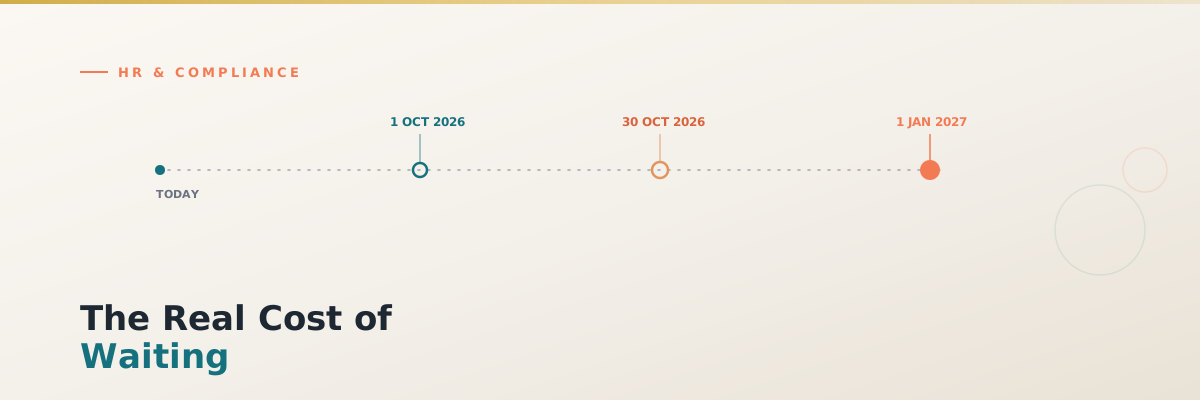
The reforms are landing in stages, not all at once, which is part of why they are so easy to underestimate. Three dates matter most.
1 October 2026: the time limit for most employment tribunal claims doubles, from three months to six. Every conversation, message and decision a manager makes now has twice as long to be examined later — which means the records being created today already need to hold up to that standard.
30 October 2026: employers take on a new legal duty to take all reasonable steps to prevent sexual harassment, including by third parties such as customers, clients and contractors. Trade-union information, access and representative rights change on the same date.
1 January 2027: the qualifying period for ordinary unfair dismissal drops from two years to six months, the compensation cap for ordinary unfair dismissal is removed, and dismissal-and-rehire protections strengthen considerably. Probation, in other words, stops being a quiet formality.
None of these dates are estimates. They are confirmed, and the gap between now and the first of them is already closing.
What Waiting Actually Costs
The cost of unpreparedness rarely shows up as a single dramatic event. It shows up as a probation review that never really happened, six months before a dismissal decision that now needs to stand up in a way it never had to before. As a harassment complaint handled with good intentions but no proper process, on a date when good intentions are no longer the legal test. As a manager's off-the-cuff comment in a meeting, sitting in someone's inbox for the better part of a year before it becomes evidence in a claim nobody saw coming.
An employment tribunal claim is expensive in ways that go well beyond any compensation awarded — management time, legal costs, and the very real toll of a drawn-out dispute on a team that has to keep working through it. Every one of those costs is dramatically higher for a claim your organisation did not see coming than for one it was actually prepared for.
The Pattern We See Most Often
Across the organisations we talk to, the same pattern repeats. Someone senior is broadly aware the law is changing. Nobody has translated that into what it actually means for the managers who make decisions on the ground — the ones running probation reviews, handling absence conversations, receiving a complaint, or deciding whether tonight's leaving do warrants a quiet word about behaviour beforehand.
The legal awareness sits with one person, usually in Human Resources or at board level, while the actual exposure sits with dozens of managers who were never given the chance to understand what changed, or why it matters to the conversation they are about to have.
What Getting Ahead Actually Looks Like
None of this requires turning your managers into employment lawyers, and it does not require weeks out of the business. It requires the people making day-to-day decisions to know what is changing, when, and what it means in practice — recognising risk early, holding the right conversation, keeping a record that would make sense to someone reading it in six months' time, and knowing when to bring in specialist advice rather than guess.
That is a matter of weeks to put in place properly, not months. What it is not, is something that gets easier to leave until closer to the date — every week between now and 1 October 2026 is a week less to prepare, not a week of extra runway.
What Being Ready Buys You
Organisations that get ahead of these changes are not doing anything dramatic. They are simply having the conversation now instead of after the first difficult case lands on the new rules. That is the entire difference between preparation and exposure here — not a bigger budget, not a longer programme, just doing it before the date arrives rather than after.
If your management team has not yet been briefed on what changes on 1 October, 30 October 2026 and 1 January 2027, it is worth doing before the date does it for you. Speak to our team about preparing your managers, or explore our Employment Law Changes 2026-2027 training.